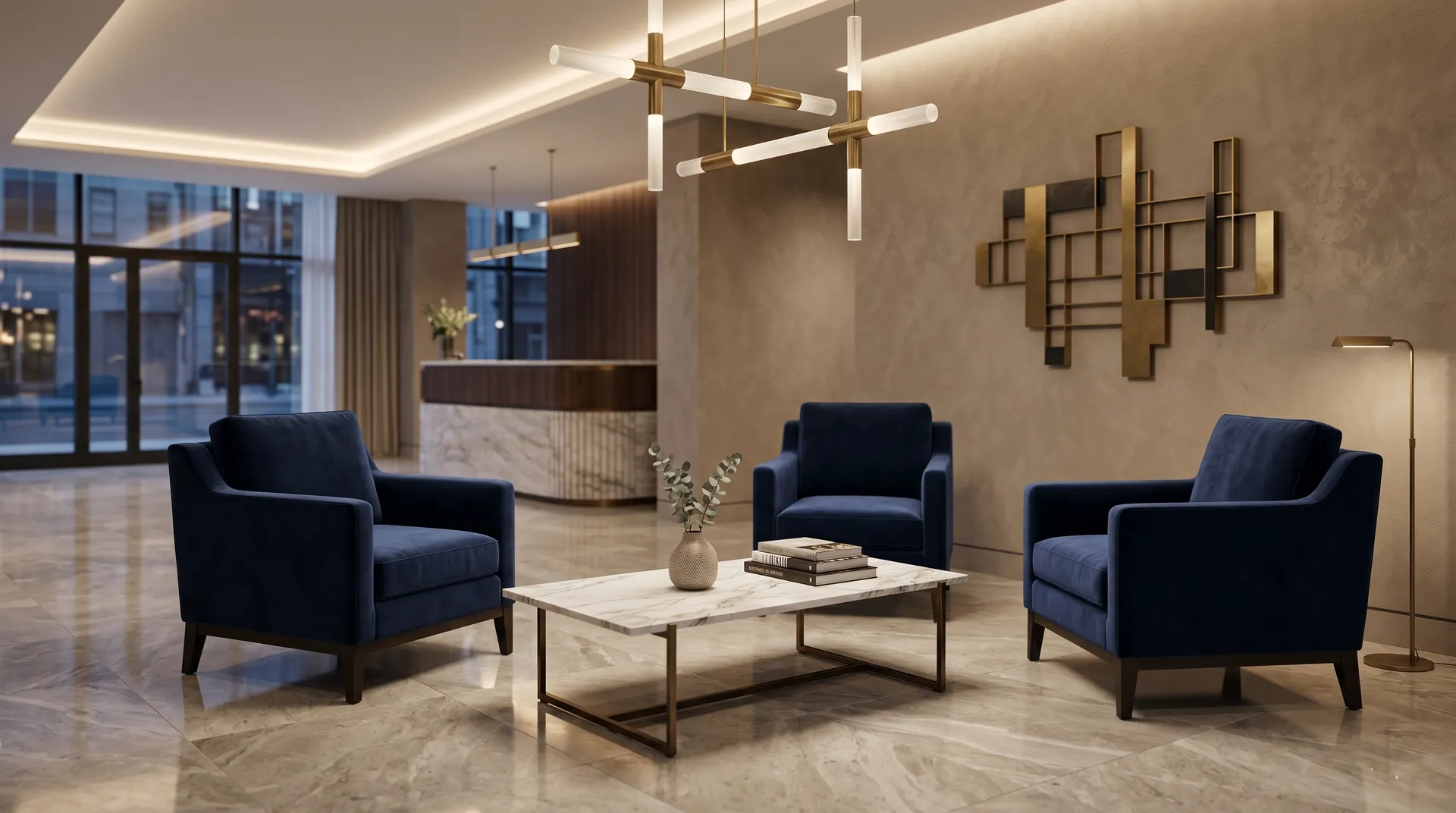
Bouclé and velvet create different visual effects on the same chair. Bouclé emphasizes a textured surface; velvet gives a directional pile that can change appearance with light. Neither name tells you the fiber composition, cleaning method, or performance of a particular fabric. Choose the look first, then compare the exact swatches and their documentation.
What is the difference between bouclé and velvet?
Bouclé commonly uses looped yarns to create a visibly textured surface. The loops can be fine and close or larger and more pronounced, so two fabrics described as bouclé may look and feel quite different. Ask for the composition and fabric reference rather than assuming that bouclé means wool or a particular blend.
Velvet has a cut-pile surface. Pile direction can affect how a color appears across a seat, back, or curved arm. Fiber content and finishing also matter: a velvet label alone does not establish stain resistance, abrasion performance, or a cleaning procedure.
Compare the fabric on the chair, not just on a screen
Place both swatches beside the intended wood, metal, rug, and wall finishes. View them in daylight and under the room lighting. Rotate the velvet sample to see the change in shade; view the bouclé at normal seating distance to judge whether its texture complements or competes with other surfaces.
For a curved chair, request an upholstered sample or close photographs of the seams and transitions. A flat swatch does not show how the fabric behaves around arms, tight curves, or the seat edge. Record the approved fabric code, color, pile or pattern direction, and reference sample.
Which is easier to maintain?
There is no reliable winner based only on the words bouclé and velvet. Obtain the supplier’s care instructions for the exact fabric, including the permitted cleaning products and methods. Ask how the surface should be handled after pressure marking, a spill, or local soiling.
Use the actual swatch to discuss the likely conditions: frequent dining spills, bags rubbing against arms, direct sunlight, or regular cleaning by a housekeeping team. Do not assume a textured fabric hides every mark or that a velvet surface can tolerate every cleaning agent. Do not use a generic online cleaning recipe in place of the fabric supplier’s instructions.
How should hospitality buyers compare durability?
Request performance information for the selected fabric and intended use. Abrasion is one consideration; also ask about pilling, color transfer, light exposure, seam behavior, and cleaning compatibility. Avoid choosing solely by the largest abrasion number.
The Association for Contract Textiles explains that abrasion results above its guidelines do not indicate product lifespan. A laboratory result is not a promise that a finished chair will last a stated number of years.
A practical decision for your room
Consider bouclé when surface texture is central to the design. Consider velvet when a directional, light-responsive surface suits the palette. For either option, compare a physical swatch, confirm care requirements, and evaluate a sample chair when comfort and upholstery details are important.
If selecting from ROBERT CASA, use the current product page to establish the chair identity and recorded materials. Availability of a different fabric, its price, quantity requirement, and production timing need a written quotation. An article about upholstery does not establish that every listed chair is available in either fabric.
What to include in the approval
Keep the chair model, fabric supplier and reference, color, composition, direction, approved sample, care instructions, and any required test documents together. If upholstery changes after approval, review whether the seam layout, comfort, or required evidence also needs to be checked.
For general manufacturer care guidance, see Kvadrat’s care and maintenance documents. These documents are a reference for its textiles, not evidence that ROBERT CASA uses Kvadrat fabric or that the same instructions apply to another material.